Deep Learning is a new area of Machine Learning research, which has been introduced with the objective of moving Machine Learning closer to one of its original goals: Artificial Intelligence.
This website is intended to host a variety of resources and pointers to information about Deep Learning. In these pages you will find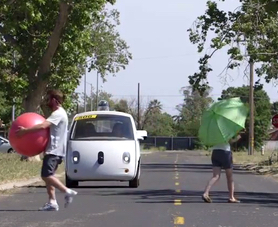
- a reading list,
- links to software,
- datasets,
- a list of deep learning research groups and labs,
- a list of announcements for deep learning related jobs (job listings),
- as well as tutorials and cool demos
http://www.kurzweilai.net/deep-neural-networks-that-identify-shapes-nearly-as-well-as-humans
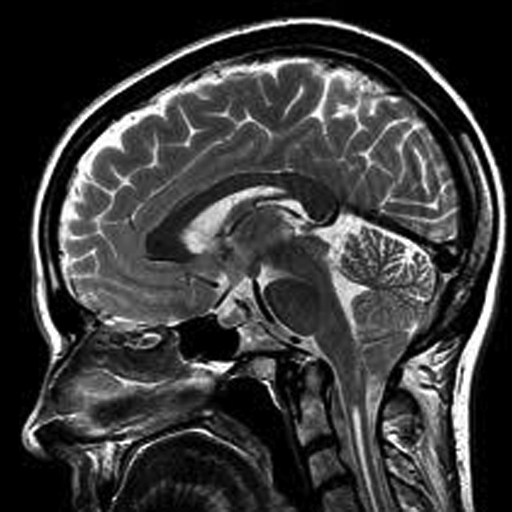
Deep learning algorithms enable optimal results in the differential diagnosis of ecographic tumor lesions.
http://www.kurzweilai.net/machine-learning-rivals-human-skills-in-cancer-detection

For the last four months, there has been a great deal of noise about the release of the AI chatbot, ChatGPT. It’s a generative language model that can carry on conversations on any topic and even has some creative capabilities. In reality, daily use of this chatbot mostly turns into a slightly more intelligent version of a browser search. In scientific fields, it can be very useful but is not always reliable in its content. You often get the impression that the responses to specific questions always follow the same constructive, logical, and syntactic pattern. A significant factor, however, is the use of the chat for content research, especially when you need to find related or relevant information from disciplines outside your own expertise. For a multidisciplinary approach to a specific problem, it is useful for setting up blocks of specific competence and then supporting the discussion.
Here is its definition of “machine learning.”
Machine learning is a type of artificial intelligence (AI) that allows computer systems to automatically learn and improve from experience without being explicitly programmed. In other words, it is the process of training algorithms or models to make predictions or decisions based on input data, without being explicitly programmed to do so.
There are three main types of machine learning: supervised learning, unsupervised learning, and reinforcement learning. In supervised learning, the algorithm is trained on labeled data, where the input data is labeled with the correct output. In unsupervised learning, the algorithm is trained on unlabeled data, where it must find patterns or structure in the data. In reinforcement learning, the algorithm learns by interacting with an environment and receiving feedback in the form of rewards or penalties.
Machine learning is used in a wide range of applications, including natural language processing, computer vision, speech recognition, recommender systems, and more.
We shouldn’t confuse this with general concepts of “artificial intelligence” that evoke futuristic scenarios of a society dominated by intelligent machines capable of wielding “power” with the goal of becoming “masters of the world.” There’s certainly no limit to our imagination, and anything can happen or be produced by the human mind, of which we still know very little. We may be beginning to understand how memory works, but when it comes to invention or even “fantasy,” we simply can’t explain where it comes from (if we think about our own dreams, we are sometimes even frightened by the complexity and realism of the issues they represent).
Deep neural networks (DNNs) are capable of learning to identify shapes, so “we’re on the right track in developing machines with a visual system and vocabulary as flexible and versatile as ours,” say KU Leuven researchers.
The finding that deep neural networks (DNNs) can be trained to identify objects by their shape was a pivotal step, suggesting we are on a better path toward machines with more human-like visual abilities. However, subsequent research has revealed significant complexities, showing that while we’ve made progress, achieving a visual system as flexible and versatile as our own remains a distant goal.
The Shape vs. Texture Bias
The original optimism stemmed from the impressive performance of Convolutional Neural Networks (CNNs) on image recognition tasks. Yet, researchers later discovered a critical shortcut these models were taking: they were heavily biased towards recognizing textures rather than shapes.
For instance, a standard CNN might identify an image as a “cat” primarily because it recognizes cat fur, even if that texture is mapped onto the shape of a bus. Conversely, a line drawing of a cat, which has all the shape information but no texture, would often confuse the model. Humans, even young children, have a strong shape bias; we effortlessly recognize a cat from a simple outline. This fundamental difference highlights a major gap between artificial and human vision. The KU Leuven research was crucial in identifying this bias and demonstrating that it could be overcome.
How We’re Closing the Gap
To make DNNs more like us, researchers have developed several techniques to encourage a shape bias:
- Stylized Training Data: One of the most effective methods involves training models on datasets where the original textures of images are replaced with random art styles. For example, a photorealistic dog might be rendered to look like it was painted by Van Gogh. This forces the network to ignore texture—since it’s now random and unhelpful—and focus solely on shape to correctly classify the object.
- Data Augmentation: Applying aggressive data augmentation techniques that distort or remove textural cues can also compel the model to learn more robust, shape-based features.
- Architectural Innovations: Newer architectures like Vision Transformers (ViTs) process images differently than CNNs. They divide an image into patches and analyze the relationships between them, which some research suggests may lead to a more inherent focus on global shape over local texture.
Models trained with a shape bias are not only more aligned with human perception but are also more robust. They perform better on corrupted or out-of-distribution images (e.g., recognizing a deer in a snowy landscape after being trained only on images of deer in forests) and are less susceptible to certain types of adversarial attacks.
The Road Ahead: Beyond Recognition
While teaching machines to see shapes is a significant milestone, human vision is far more than just object recognition. The ultimate goal of a “flexible and versatile” visual system requires machines to develop:
- Causal and Commonsense Reasoning: We understand why a ball is round and what happens if we drop it. A DNN only knows that a round-ish object in its training data is labeled “ball.” It lacks any underlying understanding of physics or function.
- Compositionality: Humans can see a scene and instantly understand the relationships between its parts (e.g., “a man is walking his dog on a leash”). DNNs struggle to parse these complex interactions reliably.
- True Generalization: A human who learns what a chair is can recognize an immense variety of never-before-seen chairs. While DNNs are improving, they still falter when presented with objects that deviate too far from their training data.