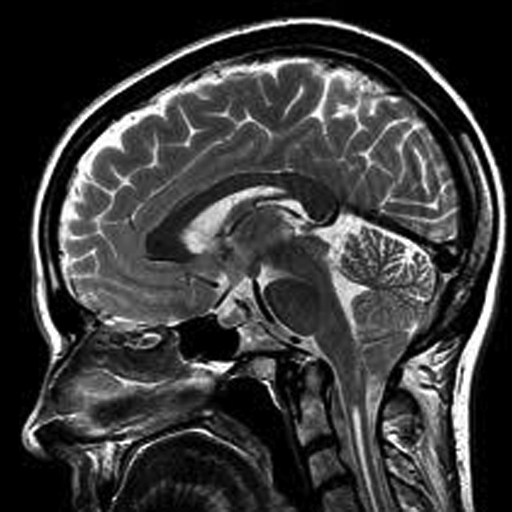
Decision-making is a complex process that involves multiple brain regions. The prefrontal cortex (PFC) is thought to play a key role in decision-making, as it is responsible for planning, organizing, and executing actions. The PFC also receives input from other brain regions, such as the hippocampus, amygdala, and striatum, which provide information about the current situation, the potential outcomes of different choices, and the emotional valence of those outcomes.
Researchers have used various techniques to study the neural correlates of decision-making. One common strategy is to use functional magnetic resonance imaging (fMRI) to measure changes in blood oxygen levels in the brain as people make decisions. fMRI studies have shown that the PFC is activated during decision-making, especially when the decision is difficult or complex. The PFC is also activated when people are learning from their decisions, which suggests that it plays a role in updating our knowledge about the world and how to make decisions.
Here are some of the specific brain areas that are involved in decision-making:
- The prefrontal cortex (PFC): The PFC is a large region of the brain that is involved in a wide range of cognitive functions, including attention, working memory, planning, and decision-making. The PFC is thought to play a role in representing the current state of the environment, generating possible responses, and evaluating the consequences of each response.
- Cingulate cortex: The cingulate cortex is a region of the brain that is located in the medial prefrontal cortex. The cingulate cortex is involved in monitoring the environment for threats and rewards, and it helps to prioritize decisions.
- Amygdala: The amygdala is a small, almond-shaped structure that is located in the medial temporal lobe. The amygdala is involved in processing emotions, and it helps to guide decisions based on emotional cues.
- Basal ganglia: The basal ganglia are a group of interconnected nuclei that are located deep within the brain. The basal ganglia are involved in motor control, and they help to implement decisions.
In addition to these specific brain areas, there are a number of other brain regions that are involved in decision-making, including the parietal cortex, the temporal cortex, and the hippocampus. The parietal cortex is involved in processing sensory information, and it helps to guide decisions based on the current state of the environment. The temporal cortex is involved in processing auditory and visual information, and it helps to guide decisions based on the information that is being perceived. The hippocampus is involved in memory, and it helps to store information that is relevant to decision-making.
—
The transformation of sensory input to motor output through the higher-order cognitive process of decision-making is the most challenging aspect of neuroscience.
In doing so, we are afforded a glimpse of the building blocks of higher thought and consciousness. A stimulus might motivate a particular behavior, but the action may be delayed, pending additional information, or it may never occur. This freedom from the immediacy of action means there are operations that transpire over time scales that are not immediately beholden to changes in the environment or the real-time demands of control of the body. Of course, not all decisions invoke cognition.
Many behavioral routines (swimming, walking, feeding, and grooming) have branch points that may be called decisions, but they proceed in an orderly manner without much flexibility or control of the tempo. They are governed mainly by the time steps of nervous transmission and are dedicated for the most part to particular input–output relationships.
A decision is a commitment to a proposition, action, or plan based on evidence (sensory input), prior knowledge (memory), and expected outcomes. The commitment is provisional. It does not necessitate behavior, and it can be modified. We can change our minds. The critical component is that some consideration of evidence leads to a change in the state of the organism that we liken to a provisional implementation of an action, strategy, or new mental process.
Such propositions can be represented as a plan of action: I decide to turn to the right, to leave safe shelter, to look for water, to choose a path least likely to encounter a predator, to approach a stranger, or to seek information in a book.
This view invites us to consider knowing as the result of directed (mostly non-conscious) interrogation, rather than an emergent property of neural representations.
The simplest type of decision involves the detection of a weak stimulus, such as a dim light or a faint sound, odor, or touch. Such experiments were therefore used to infer the fundamental sensitivities of a sensory system from behavior, a subfield of psychology known as psycho-physics.
The psychophysical investigation of perception began with Ernst Weber and Gustav Fechner in the 19th century. They were interested in measuring the smallest detectable difference in intensity between two sensory stimuli. It turns out they also lay the foundation for the neuroscience of decision-making because every yes/no answer is a choice based on sensory evidence.
The brain does not directly perceive a stimulus but receives a neural representation of the sample. As a result, some of the noise arises from the neural activity involved in forming this representation. It is the job of the brain to decide from which distribution the sample came, using information encoded in neural firing rates. However, the brain does not have access to the distributions, just the one sample involved in each given decision. It is the separation of these distributions—the degree that they do not overlap—that determines the discriminability of a stimulus from noise. The decision rule is to say “yes” if the evidence exceeds some criterion or threshold.
The challenge for neuroscience is to relate the terms signal, noise, and criterion to neural representations of sensory information and operations upon those representations that result in a choice.
What type of sensory information is produced by different afferent units? What is the encoding of information from the visual, auditory, and somatosensory channels?
The visual and auditory systems, in particular, employ an information-processing strategy that begins at the sensory level (retina and cochlea). The encoding allows for a significant extension of bandwidth and a transition to progressively more abstract categorization as information flows from the periphery towards the center, namely specialized cortical structures for sensory modalities: visual areas and auditory areas.
The auditory pathways: rules for encoding information
- Frequency Encoding: The auditory nerve encodes the frequency or pitch of sound. Different neurons within the auditory nerve are sensitive to different frequency ranges, allowing them to respond preferentially to specific sound frequencies.
- Intensity Encoding: The intensity or loudness of sound is encoded by the rate of firing of auditory nerve fibers. Louder sounds lead to a higher rate of firing, while softer sounds result in a lower rate of firing.
- Temporal Encoding: The timing or temporal aspects of sound are encoded by the precise timing of action potentials generated by auditory nerve fibers. Fine temporal details, such as the timing of sound onsets and offsets, are represented in the firing patterns of neurons.
- Phase Locking: The auditory nerve exhibits phase locking, which refers to the synchronization of neural activity with the phase of a sound wave. This allows the auditory system to preserve temporal information and encode the phase relationships between different frequencies.
These make perception of various auditory features, such as pitch, loudness, and timing.
The visual pathways: rules for encoding information
- Spatial Encoding: The optic nerve encodes spatial information related to visual stimuli. The retina consists of specialized cells called photoreceptors that respond to different wavelengths of light. These photoreceptors are organized in a pattern called the receptive field, which determines how visual information is spatially encoded. The activation of different photoreceptors in response to specific light patterns forms the basis for spatial encoding.
- Contrast Encoding: The optic nerve encodes the contrast between different visual elements. Contrast refers to the difference in light intensity between different parts of an image. Neurons in the optic nerve are sensitive to changes in contrast and generate action potentials based on the contrast information present in the visual stimulus.
- Temporal Encoding: The optic nerve also encodes temporal aspects of visual information. The timing of action potentials generated by neurons in the optic nerve can carry temporal information related to the onset, duration, and timing of visual stimuli. This temporal encoding contributes to our perception of motion and dynamic visual events.
- Color Encoding: The optic nerve encodes information about the colors present in a visual scene. Different types of photoreceptors in the retina are sensitive to different wavelengths of light, allowing for the discrimination of various colors. The activation patterns of these photoreceptors are transmitted through the optic nerve, providing color information to the brain.
These make perception of various visual features, such as colors, contrast, spatial position, and temporal sequence.